
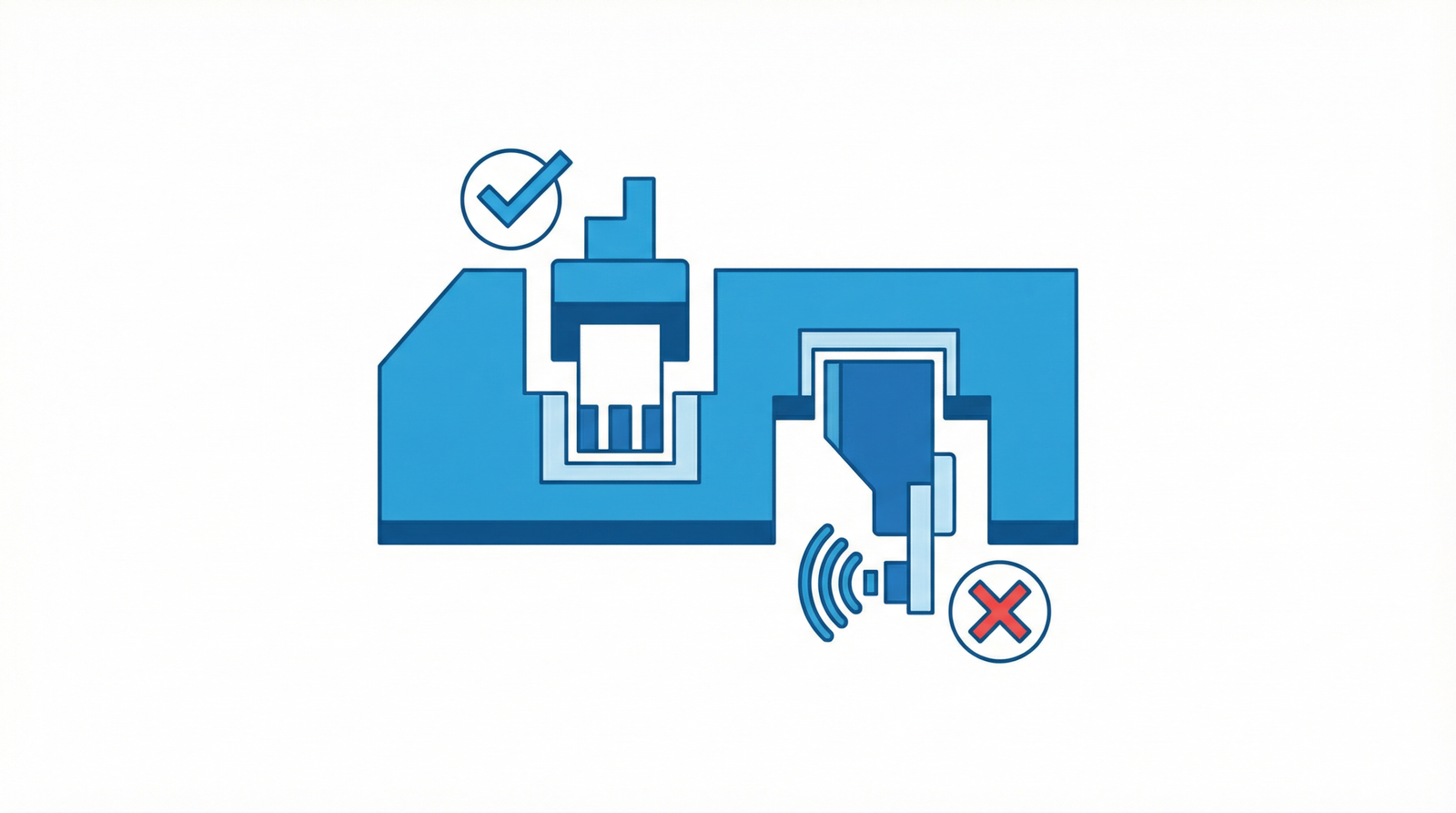
Poka-Yoke, the Japanese error-proofing methodology developed by Shigeo Shingo, has prevented billions of defects across manufacturing, healthcare, service industries, and everyday products. This comprehensive guide presents over 50 real-world Poka Yoke examples demonstrating how organizations eliminate errors at the source rather than detecting them after occurrence.
These Poka Yoke examples span every industry imaginable. From automotive assembly lines to hospital medication systems, real-world Poka Yoke examples show how simple design changes prevent costly errors. Understanding proven Poka Yoke examples helps quality professionals implement effective error-proofing in their own organizations.
Whether you’re implementing lean manufacturing, improving quality systems, or designing foolproof products, these Poka Yoke examples provide immediately actionable insights. The best Poka Yoke examples share common traits: simplicity, reliability, and immediate feedback that saves companies millions while improving customer satisfaction dramatically.
What is Poka Yoke?
Poka-Yoke (ポカヨケ), translated as “mistake-proofing” or “inadvertent error prevention,” is a lean manufacturing technique that makes it impossible to make mistakes or immediately obvious when an error occurs.
Developed by Shigeo Shingo at Toyota in the 1960s, Poka Yoke transformed quality thinking from detection to prevention. Before exploring our Poka Yoke examples, understanding the core principles is essential.
The Three Poka Yoke Principles
| Principle | Description | Poka Yoke Example |
|---|---|---|
| Elimination | Design the error out completely | Asymmetric USB-C connectors work both ways |
| Replacement | Substitute error-prone process with reliable one | Barcode scanning instead of manual data entry |
| Facilitation | Make correct action easier than incorrect | Color-coded connections prevent wrong assembly |
Poka Yoke Detection Methods
Shigeo Shingo identified three detection approaches in his foundational work on error-proofing. For deeper insights into his methodology, explore our complete Shigeo Shingo books guide.
- Contact Method: Physical attributes (shape, size, dimension) prevent errors
- Fixed-Value Method: Specific number of actions or items must occur
- Motion-Step Method: Steps must occur in correct sequence
These three methods form the foundation for every Poka Yoke example in this guide.
Poka Yoke Examples in Manufacturing
Automotive Manufacturing Poka Yoke Examples
Example 1: Asymmetric Connectors
Problem: Electrical connectors installed backward causing assembly line stops
Poka Yoke Solution: Connector housings designed with unique shapes fitting only correct orientation
Detection Method: Contact method
Result: Zero reversed connector installations, eliminated 2 hours daily rework
Example 2: Torque-to-Angle Fastening
Problem: Critical bolts sometimes over-torqued or under-torqued
Poka Yoke Solution: Smart torque wrenches that beep and lock when proper torque achieved
Detection Method: Fixed-value method
Result: 100% proper torque application, eliminated warranty claims related to loose fasteners
Example 3: Parts Presence Sensors
Problem: Operators occasionally forgot to install washers before bolts
Poka Yoke Solution: Weight sensors verify all components present before allowing next assembly step
Detection Method: Fixed-value method
Result: Eliminated missing component defects (previously 0.3% defect rate)
Example 4: Paint Booth Color Verification
Problem: Wrong paint color occasionally sprayed on vehicles
Poka Yoke Solution: Barcode scanner verifies paint color matches work order before spray gun activates
Detection Method: Contact method (information verification)
Result: Zero wrong-color vehicles, saved $15,000 monthly in rework
Example 5: Sequential Assembly Jigs
Problem: Components installed in wrong sequence causing quality issues
Poka Yoke Solution: Assembly fixture releases parts only in correct order
Detection Method: Motion-step method
Result: Eliminated sequence errors, reduced cycle time by 18%
Electronics Manufacturing Poka Yoke Examples
Example 6: Polarity-Keyed Connectors
Problem: Batteries installed backward destroying circuits
Poka Yoke Solution: Battery compartment designed so batteries fit only correct polarity
Detection Method: Contact method
Result: Zero reverse-polarity installations across millions of units
Example 7: Pick-to-Light Systems
Problem: Wrong components picked for circuit board assembly
Poka Yoke Solution: LED lights illuminate correct bin; system advances only when correct component removed
Detection Method: Motion-step method
Result: Wrong-part picking reduced from 2.1% to 0.001%
Example 8: SMT Component Verification
Problem: Similar-looking surface mount components confused during loading
Poka Yoke Solution: Vision system verifies component type before placement machine operates
Detection Method: Contact method (visual verification)
Result: Wrong component placement eliminated, saving $200,000 annually in scrap
Example 9: Orientation Notches
Problem: Integrated circuits installed 180 degrees rotated
Poka Yoke Solution: Notch on chip corner matches notch on circuit board socket
Detection Method: Contact method
Result: Classic Poka Yoke example teaching error-proofing worldwide with billions of correct installations
Example 10: Solder Paste Stencil Alignment
Problem: Solder paste stencils occasionally misaligned on PCBs
Poka Yoke Solution: Tooling pins fit unique holes ensuring only correct alignment possible
Detection Method: Contact method
Result: Eliminated misalignment defects (previously 0.8% of boards)
Pharmaceutical Manufacturing Poka Yoke Examples
Example 11: Tablet Counting Verification
Problem: Bottle counts occasionally incorrect (59 or 61 instead of 60)
Poka Yoke Solution: Automated vision system counts tablets; bottle rejected if count incorrect
Detection Method: Fixed-value method
Result: Zero count errors reaching customers, FDA compliance improved
Example 12: Blister Pack Vision Inspection
Problem: Empty blister cavities occasionally shipped
Poka Yoke Solution: Camera inspects every cavity; line stops if missing tablet detected
Detection Method: Fixed-value method
Result: Eliminated empty cavity complaints, protected brand reputation
Example 13: Prescription Label Verification
Problem: Wrong label applied to medication bottle (critical safety issue)
Poka Yoke Solution: Barcode verification ensures label matches prescription before bottle released
Detection Method: Contact method (information matching)
Result: Zero labeling errors in pharmacy operations, enhanced patient safety
Example 14: Fill Volume Verification
Problem: Liquid medications occasionally under-filled or over-filled
Poka Yoke Solution: Checkweigher automatically rejects bottles outside specification
Detection Method: Fixed-value method
Result: 100% correct fill volumes, regulatory compliance maintained
Example 15: Cleanroom Gowning Sequence
Problem: Personnel entering cleanroom in improper garment sequence
Poka Yoke Solution: Dispensers release garments only in correct sequence with confirmation at each step
Detection Method: Motion-step method
Result: Contamination events reduced 90%, GMP compliance improved
Food and Beverage Poka Yoke Examples
Example 16: Metal Detector Inline Rejection
Problem: Metal contamination occasionally reaches packaged products
Poka Yoke Solution: Metal detector automatically diverts contaminated products; line cannot continue until removed
Detection Method: Contact method (physical detection)
Result: Zero metal contamination incidents, protected consumer safety
Example 17: Fill Level Vision System
Problem: Bottles under-filled or over-filled
Poka Yoke Solution: Camera inspects fill level; rejects out-of-spec bottles automatically
Detection Method: Fixed-value method
Result: Eliminated customer complaints about short fills
Example 18: Cap Torque Verification
Problem: Bottle caps too loose (leakage) or too tight (difficult opening)
Poka Yoke Solution: Torque sensor verifies proper cap tightness; rejects non-conforming bottles
Detection Method: Fixed-value method
Result: Eliminated leakage complaints, improved customer satisfaction
Example 19: Allergen Cross-Contamination Prevention
Problem: Production lines not properly cleaned between allergen-containing and allergen-free products
Poka Yoke Solution: ATP swab testing required before line restart; production locked until passing result entered
Detection Method: Motion-step method
Result: Zero allergen cross-contamination incidents, protected sensitive consumers
Example 20: Date Code Verification
Problem: Incorrect production date printed on packages
Poka Yoke Solution: Vision system reads printed date; rejects packages with wrong date or missing print
Detection Method: Contact method (information verification)
Result: Eliminated date coding errors, ensured proper product rotation
Poka Yoke Examples in Healthcare
Healthcare Poka Yoke examples are among the most impactful because they directly protect patient safety. These Poka Yoke examples demonstrate how error-proofing saves lives daily.
Hospital and Clinical Poka Yoke Examples
Example 21: Patient Wristband Barcode Scanning
Problem: Medications administered to wrong patient
Poka Yoke Solution: Nurse scans patient wristband and medication; system alerts if mismatch detected
Detection Method: Contact method (information matching)
Result: Medication errors reduced 88%, enhanced patient safety dramatically
Example 22: Surgical Instrument Counting Mats
Problem: Surgical instruments occasionally left inside patients
Poka Yoke Solution: RFID-tagged instruments counted automatically before and after surgery; alerts if count mismatch
Detection Method: Fixed-value method
Result: Retained surgical item incidents reduced to near zero
Example 23: IV Pump Smart Dose Limits
Problem: IV pumps programmed with unsafe medication doses
Poka Yoke Solution: Drug library with dose limits prevents programming outside safe range
Detection Method: Fixed-value method
Result: Programming errors reduced 95%, prevented potentially fatal overdoses
Example 24: Blood Type Verification
Problem: Wrong blood type transfused to patient (potentially fatal)
Poka Yoke Solution: Two-person verification with barcode scanning of patient and blood unit required
Detection Method: Contact method (information matching)
Result: Transfusion errors eliminated, saved lives
Example 25: Anesthesia Gas Connector Specificity
Problem: Wrong medical gas connected to anesthesia machine
Poka Yoke Solution: Diameter-indexed safety system (DISS) provides unique connector for each gas type
Detection Method: Contact method
Result: Wrong-gas connections physically impossible, critical safety enhancement
Medical Device Poka Yoke Examples
Example 26: Syringe Luer-Lock Connections
Problem: Syringes disconnecting during injection
Poka Yoke Solution: Luer-lock threads prevent accidental disconnection
Detection Method: Contact method
Result: Industry standard preventing disconnection incidents
Example 27: Defibrillator Pad Placement Diagrams
Problem: Defibrillator pads placed incorrectly during emergencies
Poka Yoke Solution: Clear diagrams on pads themselves showing exact placement
Detection Method: Facilitation (making correct action obvious)
Result: Improved defibrillation success rates, saved lives
Example 28: Insulin Pen Dose Window
Problem: Wrong insulin dose dialed on injection pens
Poka Yoke Solution: Large, clear dose window with audible clicks for each unit
Detection Method: Facilitation (visual and auditory confirmation)
Result: Dosing errors reduced significantly, improved diabetes management
These medical device Poka Yoke examples align closely with ISO 13485 quality requirements, which mandate risk mitigation throughout product lifecycle.
Poka Yoke Examples in Service Industries
Service industry Poka Yoke examples prove that error-proofing extends far beyond manufacturing. These Poka Yoke examples demonstrate applications in banking, hospitality, and retail.
Banking Poka Yoke Examples
Example 29: ATM Card Orientation Guide
Problem: Customers inserting cards backward or upside-down
Poka Yoke Solution: Card slot shaped to accept card only in correct orientation
Detection Method: Contact method
Result: Eliminated frustrated customers and support calls
Example 30: Deposit Envelope Serial Numbers
Problem: Customers forgetting to include deposit envelopes in ATM
Poka Yoke Solution: ATM cannot complete transaction until envelope with matching serial number inserted
Detection Method: Fixed-value method
Result: Eliminated missing deposit disputes
Example 31: Dual Authorization for Large Transfers
Problem: Fraudulent or erroneous large wire transfers
Poka Yoke Solution: Transfers above threshold require two authorized signatures
Detection Method: Motion-step method
Result: Prevented millions in fraud and errors annually
Hospitality Poka Yoke Examples
Example 32: Timer-Based Cooking Equipment
Problem: Food overcooked or undercooked
Poka Yoke Solution: Equipment automatically shuts off after programmed time; audible alert when food ready
Detection Method: Fixed-value method
Result: Consistent food quality, reduced waste from burned food
Example 33: Portion Control Dispensers
Problem: Inconsistent portion sizes affecting cost and quality
Poka Yoke Solution: Pre-measured dispensers release exact portion automatically
Detection Method: Fixed-value method
Result: Food cost reduced 8%, customer satisfaction improved through consistency
Example 34: Hotel Key Card Slot Power Control
Problem: Guests leaving lights and AC running when leaving room
Poka Yoke Solution: Room power activates only when key card inserted in slot near door
Detection Method: Contact method
Result: Energy costs reduced 30% across properties
Retail Poka Yoke Examples
Example 35: Self-Checkout Weight Verification
Problem: Items scanned but not placed in bagging area
Poka Yoke Solution: Scale verifies weight of scanned item matches expected weight before allowing next scan
Detection Method: Fixed-value method
Result: Shrinkage reduced 40%, honest errors prevented
Example 36: Price Gun with SKU Verification
Problem: Wrong price labels applied to products
Poka Yoke Solution: Price gun must scan product barcode; prints label only if SKU in database
Detection Method: Contact method (information verification)
Result: Pricing errors eliminated, customer disputes reduced
Poka Yoke Examples in Office and Administrative Work
Office Poka Yoke examples show that error-proofing applies equally to administrative processes. These Poka Yoke examples target common workplace errors.
Example 37: Email Recipient Warning
Problem: Confidential emails sent to wrong recipients
Poka Yoke Solution: Email system warns when sending to external addresses; requires confirmation
Detection Method: Contact method (information verification)
Result: Data breach incidents reduced 75%
Example 38: Spreadsheet Formula Protection
Problem: Critical formulas accidentally overwritten
Poka Yoke Solution: Formula cells locked; password required for changes
Detection Method: Elimination (error made impossible)
Result: Calculation errors eliminated, data integrity maintained
Example 39: Required Field Form Validation
Problem: Forms submitted with missing critical information
Poka Yoke Solution: Form cannot be submitted until all required fields completed
Detection Method: Fixed-value method
Result: Incomplete forms eliminated, processing time reduced 60%
Example 40: Document Version Control
Problem: Employees working on outdated document versions
Poka Yoke Solution: Document management system allows editing only current version; old versions read-only
Detection Method: Elimination
Result: Work duplication eliminated, version confusion prevented
Example 41: Meeting Room Booking Conflicts
Problem: Double-booking conference rooms
Poka Yoke Solution: Calendar system prevents booking already-reserved time slots
Detection Method: Elimination
Result: Meeting disruptions eliminated, improved productivity
Poka Yoke Examples in Everyday Products
Everyday product Poka Yoke examples are the most relatable. You encounter these Poka Yoke examples daily without realizing their error-proofing purpose.
Example 42: USB-C Reversible Connector
Problem: USB cables inserted wrong orientation
Poka Yoke Solution: Connector works both orientations
Detection Method: Elimination
Result: User frustration eliminated, industry standard adopted
Example 43: Washing Machine Door Interlock
Problem: Machine started with door open causing water flooding
Poka Yoke Solution: Machine cannot start unless door fully closed and latched
Detection Method: Contact method
Result: Flooding incidents impossible, safety enhanced
Example 44: Microwave Door Switch
Problem: Microwave operating with door open causing radiation exposure
Poka Yoke Solution: Multiple interlocks ensure magnetron cannot operate unless door sealed
Detection Method: Contact method
Result: Critical safety feature preventing radiation exposure
Example 45: Gas Pump Nozzle Auto-Shutoff
Problem: Fuel tank overfilled causing spills
Poka Yoke Solution: Nozzle automatically stops flow when tank full
Detection Method: Contact method (pressure detection)
Result: Spills eliminated, environmental protection
Example 46: Child-Resistant Medication Bottles
Problem: Children accessing medications creating poisoning hazard
Poka Yoke Solution: Cap requires push-and-twist action difficult for young children
Detection Method: Facilitation (making incorrect action difficult)
Result: Child poisoning incidents dramatically reduced since introduction
Example 47: Three-Prong Electrical Plugs
Problem: Electrical devices connected without proper grounding
Poka Yoke Solution: Three-prong plug fits only three-prong grounded outlet
Detection Method: Contact method
Result: Electrical safety improved, shock hazards reduced
Example 48: Car Ignition Key Removal
Problem: Drivers locking keys inside running vehicle
Poka Yoke Solution: Key cannot be removed unless transmission in Park position
Detection Method: Motion-step method
Result: Prevented locked-key incidents and runaway vehicles
Example 49: Automatic Headlight Shutoff
Problem: Car battery drained from headlights left on
Poka Yoke Solution: Headlights automatically turn off when ignition switched off
Detection Method: Motion-step method
Result: Dead battery incidents eliminated, improved customer satisfaction
Example 50: Spell-Check in Word Processors
Problem: Documents with spelling errors published
Poka Yoke Solution: Automatic underlining of misspelled words with optional auto-correction
Detection Method: Contact method (information verification)
Result: Spelling errors dramatically reduced, professional document quality improved
Digital and Software Poka Yoke Examples
Modern software Poka Yoke examples prove that error-proofing adapts to digital environments. These Poka Yoke examples protect data and user experience.
Example 51: Form Auto-Save
Problem: Users losing work when browser crashes or connection lost
Poka Yoke Solution: Automatic saving of form data every few seconds
Result: Data loss eliminated, user frustration reduced
Example 52: Password Strength Requirements
Problem: Weak passwords compromising security
Poka Yoke Solution: System enforces minimum complexity requirements
Result: Account compromise incidents reduced significantly
Example 53: Undo Function
Problem: Accidental deletion of important work
Poka Yoke Solution: Multi-level undo allows recovery of deleted content
Result: Data loss prevented, user confidence increased
Implementing Poka Yoke Examples: Step-by-Step Guide
Learning from Poka Yoke examples is valuable, but implementing your own error-proofing solutions delivers real results. Follow this proven process.
Step 1: Identify Error-Prone Processes
Use data-driven approaches to find where errors occur:
- Review defect data and complaint records
- Analyze CAPA databases for recurring failures
- Conduct Gemba walks observing actual processes
- Interview operators about recurring mistakes
- Map processes identifying potential failure points
Organizations implementing Total Quality Management systematically identify these improvement opportunities.
Step 2: Analyze Root Causes
Understand why errors occur:
- Human Factors: Fatigue, distraction, lack of training
- Process Design: Unclear instructions, missing verification steps
- Environmental: Poor lighting, excessive noise, time pressure
- Equipment: Confusing controls, missing sensors
Step 3: Design Poka Yoke Solutions
Select the appropriate error-proofing approach based on error type:
| Error Type | Best Poka Yoke Approach | Example |
|---|---|---|
| Omission | Fixed-value method | Checklist that must be completed |
| Wrong Item | Contact method | Unique shapes preventing wrong selection |
| Wrong Sequence | Motion-step method | Interlocks releasing tasks in order |
| Wrong Quantity | Fixed-value method | Sensors counting items |
| Wrong Position | Contact method | Alignment pins and slots |
Step 4: Implement and Validate
Deploy Poka Yoke solutions effectively:
- Start with pilot implementation in limited area
- Train operators on new error-proofing devices
- Collect data proving effectiveness with before/after comparison
- Document the solution in standard operating procedures
- Share successful Poka Yoke examples across the organization
Step 5: Monitor and Improve
Ensure sustained effectiveness:
- Track defect rates continuously using statistical process control methods
- Maintain error-proofing devices properly
- Update solutions when processes change
- Build library of proven Poka Yoke examples for reference
Common Poka Yoke Implementation Mistakes
Mistake 1: Over-Reliance on Warnings
Problem: Warnings (lights, buzzers, messages) are weakest form of error-proofing.
Better Approach: Make error physically impossible rather than just alerting to it.
Mistake 2: Complex Solutions
Problem: Overcomplicated devices that fail frequently.
Better Approach: Simple mechanical solutions often more reliable than electronic ones.
Mistake 3: Ignoring Operator Input
Problem: Solutions designed without consulting those doing the work.
Better Approach: Involve operators in design since they often suggest the most effective solutions.
Mistake 4: No Validation Data
Problem: Assuming solutions work without measuring results.
Better Approach: Collect before/after defect data proving effectiveness.
Mistake 5: Manufacturing-Only Focus
Problem: Limiting error-proofing to production floor only.
Better Approach: Apply Poka Yoke examples from administrative, design, and service contexts across entire organization.
Poka Yoke Examples and Quality Standards
Error-proofing is explicitly or implicitly required in major quality standards. Studying Poka Yoke examples helps organizations meet these requirements.
ISO 9001 Quality Management
- Clause 8.5.1: Control of production and service provision
- Encourages mistake-proofing to ensure product conformity
ISO 13485 Medical Devices
- Risk management integration requires error prevention
- Design validation must address use errors with Poka Yoke examples
- Process validation includes error-proofing verification
IATF 16949 Automotive
The Automotive Industry Action Group (AIAG) emphasizes Poka Yoke as critical for automotive quality:
- Explicit requirement for error-proofing methods
- Mistake-proofing verification required in control plans
AS9100 Aerospace
- Foreign object debris (FOD) prevention is form of error-proofing
- Tool control prevents omissions
Measuring Poka Yoke Effectiveness
According to the American Society for Quality (ASQ), tracking these metrics demonstrates Poka Yoke value:
| Metric | Calculation | Target |
|---|---|---|
| Defect Reduction | (Before – After) / Before × 100% | >90% reduction |
| Cost of Quality | Scrap + Rework + Warranty savings | ROI > 5:1 |
| First Pass Yield | Good units / Total units × 100% | >99% |
| Customer Complaints | Complaints per million units | <10 PPM |
Why These Poka Yoke Examples Work
Every Poka Yoke example in this guide follows proven principles. Successful Poka Yoke examples eliminate the possibility of error rather than just detecting it.
Manufacturing Poka Yoke examples often use physical constraints. Healthcare Poka Yoke examples frequently rely on barcode verification. Service industry Poka Yoke examples typically combine digital checks with process design.
The most effective Poka Yoke examples require zero operator decision-making. When the correct action is the only possible action, errors become impossible.
Study these Poka Yoke examples carefully. Identify which approaches apply to your industry. Then adapt and implement solutions that address your specific error-prone processes.
Conclusion: Making Errors Impossible with Poka Yoke Examples
These 50+ Poka Yoke examples demonstrate a fundamental truth: preventing errors at the source is far more effective than detecting and correcting them afterward.
From Shigeo Shingo’s pioneering work at Toyota to modern applications in healthcare, software, and service industries, these Poka Yoke examples show that error-proofing delivers measurable improvements in quality, cost, and customer satisfaction.
The best Poka Yoke examples share common characteristics: simplicity, reliability, immediate feedback, and making the correct action easier than the incorrect one.
Whether you’re designing products, managing processes, or leading quality improvement initiatives, applying these proven Poka Yoke examples will dramatically reduce defects and enhance operational excellence.
Start by identifying your most error-prone processes, involve those closest to the work in designing solutions, and measure results to prove effectiveness. Building a culture where everyone contributes error-proofing ideas creates continuous improvement momentum that compounds over time.
Ready to implement error-proofing in your organization? Begin with one high-impact process, apply the principles demonstrated in these Poka Yoke examples, and systematically eliminate errors that cost time, money, and customer satisfaction. The journey to zero defects starts with making mistakes impossible.